Copyright A Bar Above, generated with AI
Table of Contents:
A symbol of sophistication and class, the Martini has been celebrated in films from the Thin Man series in the 30s and 40s all the way to present day Bond Films and many more.
In fact, there is a glass called the Nick and Nora (which Martinis are often served in) that got its name from the two main characters in the Thin Man.
No matter how it’s mixed, the Martini has made a lasting impression on how we drink as a culture. As a result of its ubiquity, everyone seems to have their own particular preferences on how to make their perfect Martini.
And although it requires very basic ingredients, the fact that it’s so spirit-forward makes it surprisingly complicated to make the perfect drink.
 Copyright A Bar Above
How to Make a Classic Martini
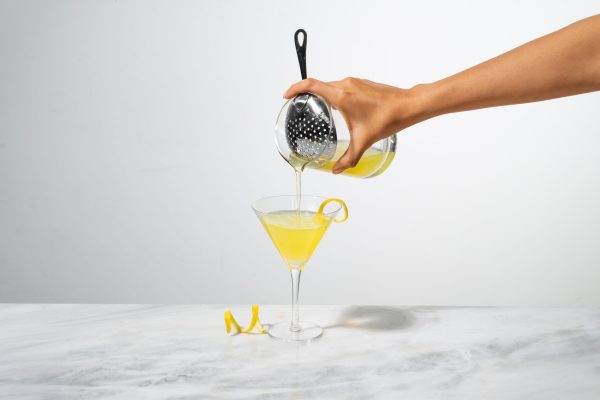
Making a classic Martini cocktail is easy-- you don't even need a cocktail shaker! Simply combine your ingredients in a mixing glass with a bar spoon, strain into a chilled glass, and add a green olive garnish or lemon twist (or both).
See how Chris does it:
A (Far Too) Brief History of the Martini Cocktail
The history of this drink, like many others, is not quite clear. Some say that it originated as the cocktail known as the Martinez, (which is gin, sweet vermouth, bitters and Maraschino liqueur) during the mid 1800s in the town of Martinez.
Another story says that it was created by the famous bartender Jerry Thomas at the Occidental Hotel in San Francisco for a gold miner on his way to Martinez.
Either way, there’s no consensus on who originated it or the “correct” recipe. So I’m going to show you my recommendation for the best classic Martini recipe, and you are welcome to tweak it to your tastes!
There are so many ways to make this your own by manipulating the ratio of gin to vermouth. Just make sure to use quality ingredients and a very cold cocktail glass, and it's sure to be delicious.
 Copyright A Bar Above
Martini Ingredient List
As I mentioned, the Martini is a simple drink that can still be hard to get right. The quality of alcohol you use and the type of gin (or vodka) makes a huge difference in your traditional Martini where the ingredients can't hide.
Do you like more herbal flavors or a more juniper-forward drink? Choose your base spirit according to your tastes-- you can't really go wrong with basic Bombay Sapphire, but we love craft gins as well. Just use a fairly high-quality gin, and you'll be fine.
Also notice that we're working with the traditional gin version, but if you prefer your drink with vodka, we won't judge... much!
 Copyright A Bar Above, generated with AI
The classic recipe has a traditional proportion of gin to vermouth is 2:1, but Chris is actually making more of a Dry Gin Martini and using 2 1/2 ounces of gin and only 1/2 ounce dry vermouth. Regardless of your chosen ratio, this cocktail requires only 3 ingredients and very little prep time:
- Gin (If you don't love the botanical flavors of gin, you can sub in vodka for a classic Vodka Martini instead-- it's a very popular option, even if it's not traditional.)
- Dry Vermouth (not sweet vermouth!)
- Orange Bitters
- Cocktail Olives and/or Slice of Lemon Peel (for garnish)
- Olive Juice (optional for a Dirty Gin Martini-- We're not doing this version today, but we do recommend trying it. You can follow our recipe and just add a splash of olive brine if you'd like.)
 Photo courtesy of DesignPickle/stock.adobe.com
Common Martini Variations/Types of Martinis
If you really want to up your Martini game, impress your guests, and figure out what you like, here are a variety of versions of this iconic cocktail to try:
- Gin or Vodka Martinis-- or some mix for the base spirit
- Dry Martini: Using less dry vermouth (a fortified wine) makes it more "dry." You can use equal parts base spirit & vermouth for a 50/50 Martini or very little dry vermouth for an extra-dry Martini. When making a classic gin Martini with less vermouth, make sure to get a quality gin that shines, bringing out more botanical flavors.
- Wet Martini: Alternatively, a Wet Martini is the opposite, adding more vermouth.
- Dirty Martini: This version includes up to 1/2 ounce olive brine for extra flavor. Garnish with olives (the true Dirty Martini lover and/or olive lover often opts for blue cheese olives to play off the tang of the olive juice).
- Vesper Martini: This boozy yet sophisticated drink combines 3 ounces gin, 1 ounce vodka, and 1/2 ounce Lillet Blanc. Garnish with twist of lemon peel. Note: You only need one of these strong Martinis!
Finding Your Favorite Gin-to-Vermouth Ratio
How much vermouth belongs in a Martini? That depends on how you like your drink. More vermouth brings its wine and herbal flavors forward; less puts the gin’s botanicals in the spotlight.
A ratio describes the proportions of gin and vermouth. A 3:1 Martini contains three parts gin to one part vermouth, while a 6:1 Martini contains six parts gin to one part vermouth.
Here are four versions to try. These are practical serving examples, so the total drink size varies.
| Gin-to-vermouth ratio | Gin | Dry vermouth | What to expect |
|---|---|---|---|
| 3:1 | 2¼ oz | ¾ oz | More noticeable vermouth character, with wine and herbal notes sharing the spotlight with the gin. |
| 4:1 | 2 oz | ½ oz | A middle ground: gin leads, with a clear contribution from the vermouth. |
| 5:1 | 2½ oz | ½ oz | A drier, more gin-forward Martini. This is the starting point Chris describes in our recipe. |
| 6:1 | 3 oz | ½ oz | The most gin-forward option here, with vermouth playing a smaller supporting role. |
Keep your gin, vermouth, bitters, and garnish consistent while experimenting. Changing one thing at a time makes it easier to figure out what you actually prefer.
Not sure where to begin? Start with our 5:1 version. If the gin feels too dominant, try increasing the vermouth to ¾ ounce, as suggested in the recipe card below.
A jigger makes these adjustments repeatable, so you can recreate your favorite version next time.
 Copyright A Bar Above
- Manhattan: Wait, how is the Manhattan a Martini? Well, it follows the classic formula of spirit (whiskey), aromatic fortified wine (sweet vermouth), and bitters (aromatic bitters).
- Negroni: Just like the Manhattan, this popular cocktail falls into the same structure by switching out ingredients-- gin, sweet vermouth, and Campari (the bitter element here).
- Chris' Version: Falling somewhere between a Martini and a Corpse Reviver #2, this sweet Martini with herbal flavors mixes 2 ounces gin, 1/2 ounce Lillet, 1/2 ounce yellow Chartreuse, and 2 dashes of orange bitters.
- 2 Dashes Orange Bitters: Or try no bitters at all. Personally, we feel that orange bitters is the key ingredient to an excellent Martini.
- Shaken or stirred (Thanks, James Bond…): For the record, common mixology rules say a spirit-forward cocktail like the Martini is supposed to be stirred, not shaken in a cocktail shaker with ice.
- And a large number of different garnishes, most commonly fresh olives, a lemon twist, or even a cocktail onion.
Gin and Vermouth Pairings to Try
Choosing a Martini gin isn’t just about finding the most expensive bottle. Think about the flavors you enjoy: bold juniper, bright citrus, earthy botanicals, or something more floral. Then choose a dry vermouth that complements those flavors.
Here are three combinations to explore:
| Gin | Dry vermouth | Why try this combination? | Suggested starting ratio |
|---|---|---|---|
| Beefeater London Dry | Dolin Dry | Beefeater’s juniper and citrus meet Dolin’s citrus and herbal notes. A useful starting point if you enjoy a classic London dry profile. | 4:1 |
| Tanqueray London Dry | Noilly Prat Original Dry | Tanqueray’s juniper, coriander, and earthy botanicals pair with a vermouth featuring chamomile, coriander, and bitter orange. Try this if you like a pronounced herbal character. | 5:1 |
| Plymouth Gin | Dolin Dry | Plymouth’s citrus and earthy notes offer another direction alongside Dolin’s citrus and gently bitter character. Try a little more vermouth to explore how the flavors interact. | 3:1 |
These ratios are starting points, not rules. Use the same combination at a second ratio before deciding whether it’s for you.
Check the vermouth label carefully: dry, blanc, and sweet vermouth aren’t interchangeable! For the recipe on this page, choose dry vermouth.
While I may have strong feelings on what makes a “correct” Martini, I’ll always fall back on my mantra: Drink what you like!
If you're interested in playing around with the gin to vermouth ratios and figuring out your favorite type of Martini, you can learn more here.
 Photo by M. Cooper via www.unsplash.com
Dessert Martinis
If a true Martini isn't your thing, you may prefer some of the dessert Martinis that are extremely popular these days. A "real" Martini is spirit, fortified wine, and bitters. So to be clear, these aren't real Martinis, but they do have their place in the cocktail world:
 Copyright A Bar Above
Espresso Martini: This modern classic is for the coffee lovers! It's made with coffee liqueur and really coffee.
Chocolate Martini: Using vodka and chocolate liqueur, this is a very decadent dessert cocktail to satisfy your sweet tooth.
Lemon Drop Martini: With fresh lemon juice, this is actually in the sour cocktail family, but we'll forgive the confusion.
(And while we’re making a gin Martini, if you do prefer vodka, check out this article. Remember, the ideal Martini is your kind of Martini.)
French Martini: This is a very sweet drink combining vodka with raspberry liqueur and pineapple juice.
 Copyright A Bar Above
Martini Drinkers, Unite
Alright, Martini lovers, so what's your favorite version? We'd love to hear from you in the comments and compare everyone's perfect Martini. Cheers!

Equipment
- 1 Bitters Bottles optional
Ingredients
- 2 1/2 oz Gin
- 1/2-3/4 oz Dry Vermouth
- 2 dashes Orange Bitters
Instructions
- Add all ingredients to a mixing glass with ice cubes.
- Stir well with your bar spoon to chill and dilute.
- Strain into a coupe or chilled Martini glass.
- Garnish with an olive and/or expressed lemon peel.
Classic Gin Martini FAQs
What makes a Martini dry or wet?
In common Martini ordering language, a dry Martini uses less vermouth, while a wet Martini uses more. Both are made with dry vermouth, but the terms come from how much you use— the less you use, the drier it is.
“Dry vermouth” describes the ingredient; “dry Martini” describes the style of drink.
Should a gin Martini be shaken or stirred?
Stirring is the usual choice for a classic gin Martini because it chills and dilutes the ingredients while keeping the drink clear and smooth. Shaking introduces air and can leave small ice fragments in the drink.
If you prefer that colder, more aerated texture, you can ask for it shaken.
Do I need orange bitters in a Martini?
Our recipe includes orange bitters for an extra layer of citrus and spice, but it's not mandatory in every Martini. Try the recipe with bitters first, and then compare it without. Keep the other ingredients and measurements the same so you can taste the difference.
Can I use vodka instead of gin?
Sure! Substitute vodka to make a Vodka Martini, and then adjust the vermouth to taste. Vodka generally brings less botanical character than gin, so the vermouth, bitters, and garnish will play a different role in the finished drink, so you may not want to follow this recipe exactly but rather experiment to get the right ratio for your palate.
Does dry vermouth need to be refrigerated?
Actually, yes, it does. Vermouth is wine-based and should be tightly closed and refrigerated after opening to slow oxidation and preserve its flavor. Follow the producer’s guidance for freshness. If you make Martinis occasionally, a smaller bottle can help you use it while it’s at its best.