Copyright A Bar Above
- Cocktail Shakers
- Cocktail Strainers
- Jigger
- Bar Spoon
- Mixing Glass
- Muddler
- Bar Mat
- How to Choose Bar Tools
- Why Quality Tools Matter
- Learn to Use Your Barware
- Final Thoughts
Having the right bartending tools makes cocktail-making easier, more consistent, and—let’s be honest—a lot more fun.
Whether you’re a professional bartender, just getting into mixology, or the person who somehow became the designated cocktail maker at every party, you don’t need every fancy bar gadget on the market. A handful of well-made, versatile tools will get you surprisingly far.
So what do you actually need?
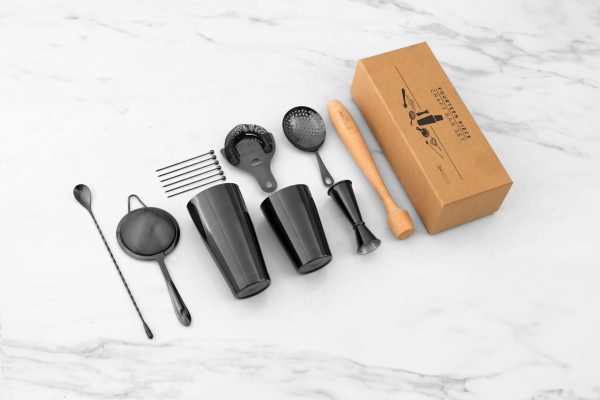
From cocktail shakers and strainers to jiggers, bar spoons, and muddlers, these are the essential bar tools I’d recommend for building a functional home or professional bar setup.

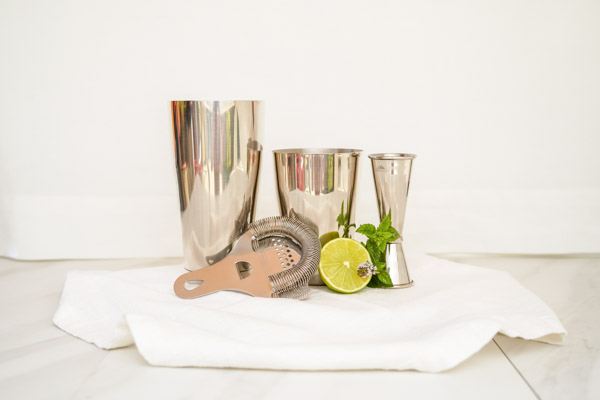
Boston Shakers, Copyright A Bar Above
Cocktail Shaker
A cocktail shaker is one of the first bar tools I’d recommend for anyone getting serious about making cocktails.
Shaking doesn’t simply combine your ingredients. It also chills, dilutes, and aerates your cocktail, creating the temperature and texture we’re looking for in drinks like the Margaritas, Whiskey Sour, Last Word, and countless other classic and modern cocktails.
The two shaker styles you’re most likely to encounter are the Boston shaker and cobbler shaker.
A Boston shaker consists of two vessels that fit together to create a seal. Modern versions commonly use two stainless steel tins, although traditionally you may also see a metal tin paired with a pint glass.
Copyright A Bar Above
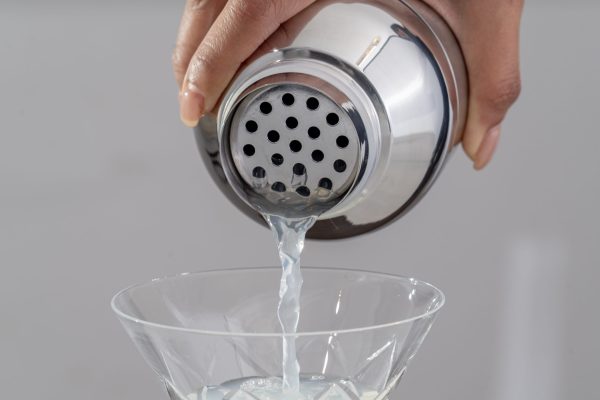
A cobbler shaker has three pieces: the main shaker tin, a lid with a built-in strainer, and a removable cap.
So which is better?
Professional bartenders often gravitate toward Boston shakers because they’re simple, roomy (meaning you can make two cocktails at once), fast to use, and easy to clean. But a quality cobbler shaker is a great option, too—especially if you like the convenience of having your strainer built right in. In the past, we haven’t loved the ones on the market… which is why we finally made our own!
If you’re choosing between them, check out our full guide to the Boston shaker vs. cobbler shaker for a deeper dive into the pros and cons of each.

Copyright A Bar Above
Cocktail Strainer
Unless you’re using a shaker with a built-in strainer, you’ll need a cocktail strainer to separate your finished drink from the ice and other solid ingredients used to make it. Honestly, even with a cobbler shaker’s built-in version, you may want a separate one that filters a little more cleanly.
There are three primary types you’ll see behind the bar: Hawthorne, fine mesh, and Julep strainers.
And yes, they actually do different things.

Copyright A Bar Above
Hawthorne Strainer
The Hawthorne strainer is probably the most recognizable cocktail strainer, with its flat perforated plate and distinctive coiled spring. It’s most commonly paired with a Boston shaker. The spring helps hold back ice and larger solid ingredients as you pour the cocktail into your serving glass.
If you’re buying only one strainer to start, this is the one I’d choose because it’s so versatile.

Copyright A Bar Above
Fine Mesh Strainer
A fine mesh strainer is typically used as a secondary strainer when you want an especially smooth finished cocktail.
You’ll hold it above the serving glass while pouring through your Hawthorne strainer, creating what’s known as double-straining.
The Hawthorne catches the larger ice and ingredients, while the fine mesh catches smaller particles like fruit pulp, seeds, tiny ice shards, and bits of muddled herbs.
Do you need to double-strain every cocktail? Nope. But if you’re working with fresh fruit, herbs, or egg whites—or simply want a particularly clean texture and presentation—it’s a handy technique to have available.
Copyright A Bar Above
Julep Strainer
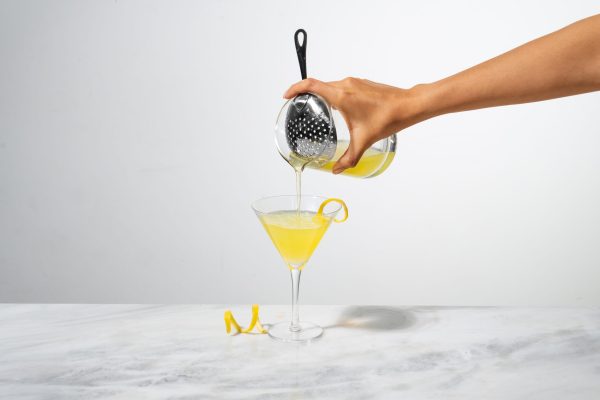
The Julep strainer looks like a large perforated spoon and is most commonly paired with a mixing glass for stirred cocktails.
After stirring a cocktail over ice, place the Julep strainer inside the mixing glass to hold back that ice while pouring your drink into its serving glass. You’ll commonly use this combination for spirit-forward cocktails like Martinis, Manhattans, Negronis, Old Fashioneds, and my personal favorite cocktail, the Bijou.
If you want to dig deeper into when and how to use each style, we’ve got a complete guide to the different types of cocktail strainers.
Copyright A Bar Above
Cocktail Jigger
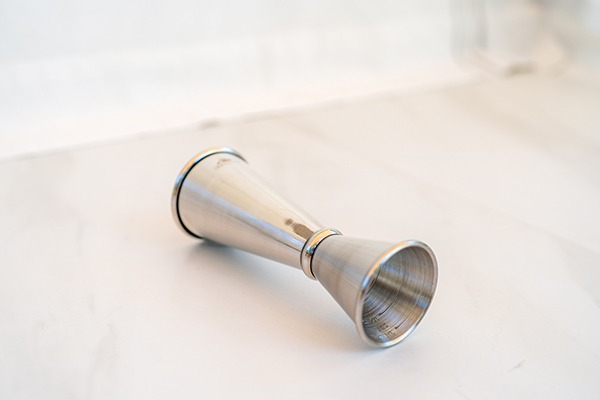
A cocktail jigger is a small measuring tool used to accurately portion spirits, citrus, syrups, liqueurs, and other cocktail ingredients. It may not be the flashiest tool on the bar, but it’s absolutely one of the most important.
Cocktail recipes depend on balance. An extra quarter-ounce of citrus or simple syrup may not sound dramatic, but it can noticeably change the finished drink.
And that’s where the jigger comes in, helping you make a balanced cocktail—and then make that same balanced cocktail again.
Most modern jiggers offer multiple measurements, although I’ll say that others on the market don’t offer as many as we do. Both our Japanese-style jigger and our bell jigger feature an elongated hourglass shape that’s easy to grip and gives you ten measurements in one compact tool, marking every 1/4 ounce from 1/4 oz up to 2 ounces, plus a bonus 1/8 ounce line.
But no matter which one you buy, when shopping for a cocktail jigger, look for accurate, easy-to-read measurement markings, comfortable handling, and durable construction.

Copyright A Bar Above
Bar Spoon
If you’re going to own a mixing glass (more on that below), you’re going to want a bar spoon to go with it. These are specifically for stirring those spirit-forward cocktails we’ve already talked about. Bar spoons have long, slender handles that make it easier to reach the bottom of tall mixing vessels and smoothly stir a cocktail over ice.
So why not just grab a regular spoon from your kitchen drawer? I mean, technically, you can. But the length, balance, and twisted handle of a proper bar spoon make controlled stirring much easier.
And controlled stirring matters because we’re not simply swirling ingredients around. We’re trying to chill and dilute the cocktail while minimizing aeration, giving stirred drinks their characteristic smooth texture.
Copyright A Bar Above
Cocktail Mixing Glass
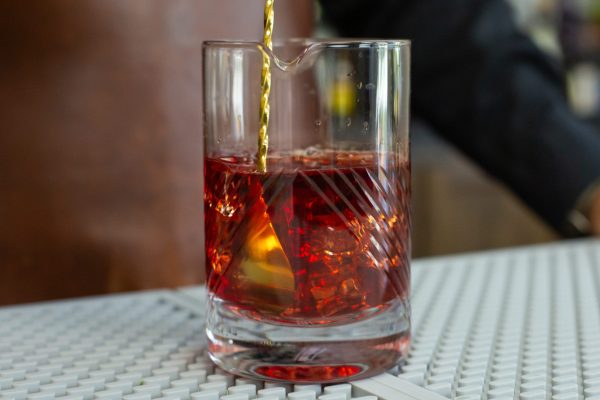
A cocktail mixing glass is the partner to your bar spoon and Julep strainer.
Rather than shaking a spirit-forward cocktail, you add your ingredients and ice to the mixing glass, stir until properly chilled and diluted, and then strain into your serving glass.
Mixing glasses come in a variety of sizes and styles. Look for one that’s sturdy, stable on the bar, comfortable to stir in, and has a good pouring spout. Thicker glass can also be helpful for durability—especially if you’re going to use it regularly.
Our mixing glasses are seamless so there’s less breakage, and they also feature a heavy-weighted bottom so nothing is moving around on the bar while you stir.
Besides being functional, a beautiful mixing glass is one of those bar tools that can make the whole cocktail-making process feel just a little more sophisticated. (Seriously, they look lovely in person!)
Copyright A Bar Above
Cocktail Muddler
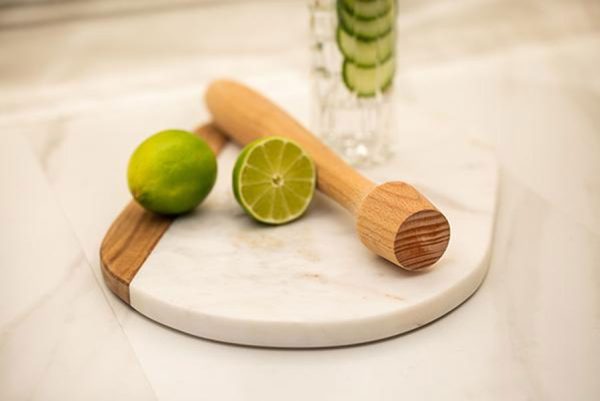
A cocktail muddler helps extract flavors and aromas from fresh fruit, herbs, spices, and other ingredients. But the important thing here is that muddling doesn’t mean absolutely pulverizing whatever you’ve put in the glass.
Mint is the classic example. When making a Mojito or Mint Julep, you generally want to gently press the mint enough to release its aromatic oils. Over-muddle it and you can end up with shredded leaves and unwanted bitter, vegetal flavors. For firmer ingredients like fruit, you can apply a little more pressure, but remember… You’re making a cocktail, not soup!
When choosing a muddler, pay attention to length. A short muddler may work perfectly well until you use it inside a tall shaker tin and spend the next minute repeatedly scraping your knuckles against the rim. Ask me how fun that is. (Insert blank face emoji, haha.)
That’s why our muddlers are extra long, to avoid the pain of banging your knuckles on your mixing vessel.
Wood muddlers offer a traditional look and feel but usually require hand washing. Food-safe plastic versions can be particularly practical because they’re durable and easy to clean. And ours isn’t hollow, so it still gives you that solid, sturdy feel.
Copyright A Bar Above
Bar Mat
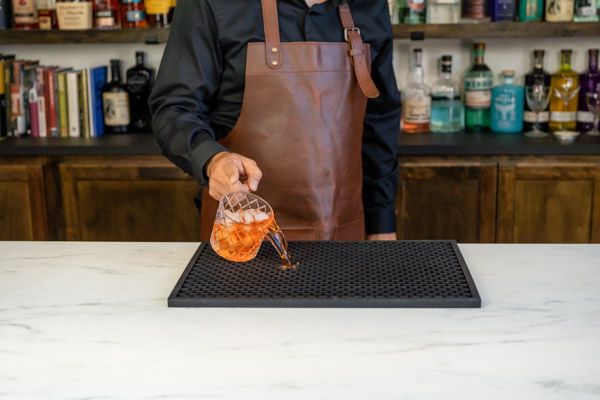
A bar mat may not actually touch your cocktail, but it makes your workspace considerably easier to manage. After all, cocktail-making involves liquid. And liquid has an irritating tendency not to stay exactly where we intended it to be.
A good bar mat gives you a nonslip surface for your tools and glassware while catching drips, spills, and condensation before they spread across your counter. For professional bartenders, it’s basically standard equipment. But it’s surprisingly handy for home bartenders, too—especially when you’re making several drinks or hosting a party.
Look for something durable, easy to rinse or wash, and large enough for your normal cocktail-making setup. Our bar mat is the sturdiest I’ve ever seen. Yes, I might be biased, but I’ve filmed Chris running it over with his truck and have held it while he tried to cut it with an actual, literal machete. So yeah, I think it’s pretty tough, and I personally use several in my own home.
Our bar mats aren’t just for bars, either. They’re great for coffee stations and for drying dishes and baby bottles. I keep one under our espresso machine and another on our dry bar, under our ice maker. They’re surprising useful and versatile.
Copyright A Bar Above