

Copyright A Bar Above
Table of Contents
- What Is a Boston Shaker?
- History of the Boston Shaker
- Anatomy of a Boston Shaker
- How to Use a Boston Shaker
- Benefits of Using a Boston Shaker
- How to Clean and Care for Your Cocktail Shaker
- Popular Boston Shaker Cocktails
- Boston Shaker vs. Cobbler Shaker
- Is a Boston Shaker Right for You?
If you’re building a home bar, there are a handful of tools I’d consider truly essential—and a good Boston shaker is pretty high on that list.
There’s a reason you’ll see this two-piece cocktail shaker behind professional bars everywhere. It’s simple, fast, durable, and versatile enough to shake everything from a classic Margarita to a Whiskey Sour. And once you get the hang of creating (and breaking) that seal between the two tins, it’s surprisingly easy to use.
So whether you’re shopping for your first cocktail shaker or wondering why bartenders tend to reach for a Boston shaker over other styles, let’s get into what makes this classic bar tool so useful.
What Is a Boston Shaker?
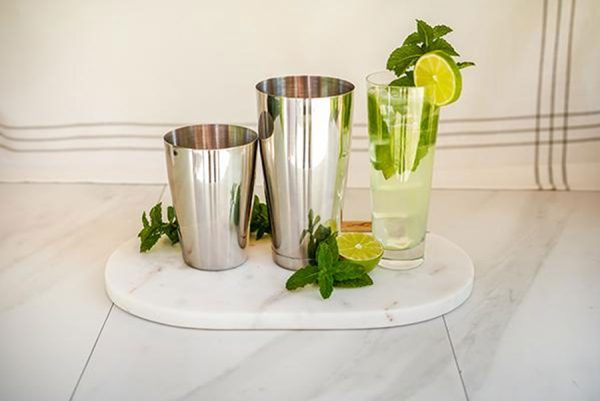
A Boston shaker is a two-piece cocktail shaker made from one large shaker tin paired with either a smaller tin or a mixing glass. The two pieces fit together at an angle to create a tight seal while you shake.
As I mentioned, you may have seen a metal tin paired with a pint glass, which was a more traditional formation when the Boston shaker was becoming popular. These days, though, many professional bartenders—and all of us here at A Bar Above—prefer a tin-on-tin Boston shaker. Why? Mostly because gravity happens.
Glass looks nice and lets you see what’s happening inside, but it can chip, crack, or break in a busy bar (or on your kitchen floor). Stainless steel shaker tins are lighter, more durable, and generally much better suited to repeated use.

Copyright A Bar Above
History of the Boston Shaker
The history of the Boston shaker isn’t super clear, to be honest. You’ll sometimes read that the Boston shaker was invented by a bartender in Boston, but there isn’t much solid historical evidence identifying one inventor or even proving that Boston is where the design originated.
What we do know is that bartenders were mixing and throwing drinks between cups and tumblers by the mid-1800s. Legendary bartender Jerry Thomas was famously making drinks with silver cups during this era, and the familiar two-piece shaker eventually developed from this style of mixing. By 1872, William Harnett had applied for a U.S. patent for an improved apparatus for mixing drinks, with other shaker designs following soon afterward.
Over time, the two-piece cocktail shaker became a staple behind the bar. The materials have changed from early metal-and-glass combinations to the stainless steel shaker tins you’ll commonly see today, but the basic idea remains wonderfully simple: Two vessels. One tight seal. Shake.
Copyright A Bar Above
Anatomy of a Boston Shaker
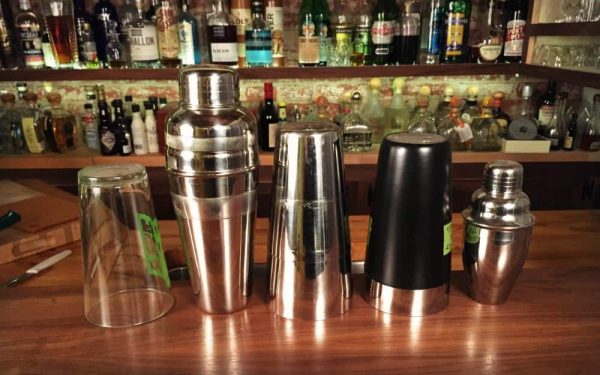
One of the things I personally like about the Boston shaker style is that there really isn’t much to it. Unlike a three-piece cobbler shaker with its body, built-in strainer, and cap, a Boston shaker has just two pieces.
Large Shaker Tin
The larger tin holds your cocktail ingredients and ice and provides plenty of room for everything to move around while you shake.
Most modern shaker tins are made from stainless steel because it’s durable, easy to clean, and isn’t going to shatter when someone inevitably knocks it off the bar.
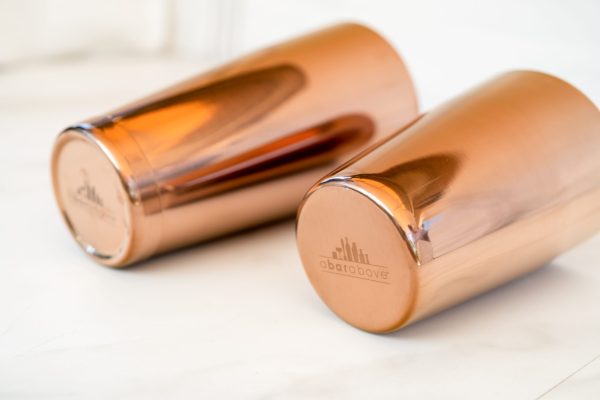
Some tins are also weighted at the base. Our A Bar Above Boston shaker uses a circle-welded weight, which adds balance without relying on a little spot-welded piece that’s more likely to come loose over time.
Copyright A Bar Above
Small Shaker Tin or Pint Glass
The second piece fits inside the mouth of the larger tin at a slight angle, creating the seal that keeps your cocktail inside instead of all over you, your counter, and possibly your unsuspecting dinner guests.
Traditionally, like I mentioned, this second vessel might have been a pint glass. But today, a smaller stainless steel tin is extremely common, particularly in professional bars where durability matters. I’ve certainly still since the metal-and-glass version being used in a bar, which always makes me wince a little. But hey, some people love that comb. Until it breaks in your bar well, that is…
Our Boston shaker uses two food-safe stainless steel tins for exactly that reason. You lose the ability to watch your cocktail slosh around while you shake, but we’ll happily make that trade for something that won’t shatter. [Inserts shrug emoji.]

Copyright A Bar Above
How to Use the Boston Shaker
The Boston shaker can look a little intimidating the first time you use one, particularly when those tins seal together and suddenly seem determined to remain that way forever. I promise, there’s a technique:
- Add your ingredients: Measure your cocktail ingredients into the smaller shaker tin.
- Add ice. Fill the tin with enough ice to properly chill and dilute the drink (usually one solid scoop’s worth).
- Create the seal. Place the larger tin over the smaller one at a slight angle, and give it a firm tap with the heel of your hand.
- Check your seal. Make sure the tins are securely joined before lifting them. This is an excellent time to avoid learning a lesson about gravity.
- Shake. Hold one hand over each end of the shaker and shake vigorously. For many cocktails, around 10–15 seconds is a useful starting point, although the exact time depends on your ice, ingredients, and desired dilution.
- Break the seal. Find the point on the side of the shaker where the two tins begin to separate and give the larger tin a firm tap with the heel of your hand. The seal should release. Need help? Watch our video below.
- Strain. Fit a Hawthorne strainer over the large tin, and strain your cocktail into its serving glass. If your drink contains fruit, herbs, or fresh juice, you probably want to double strain using a fine strainer as well.
- Garnish and serve. Add the appropriate garnish and enjoy.
It may take a few tries before opening and closing your shaker feels effortless. That’s completely normal. Once the muscle memory kicks in, you’ll wonder why it ever seemed complicated.
Benefits of Using the Boston Shaker
So why do so many bartenders choose a Boston shaker? Here are a few reasons we love this style at A Bar Above.
It’s Fast
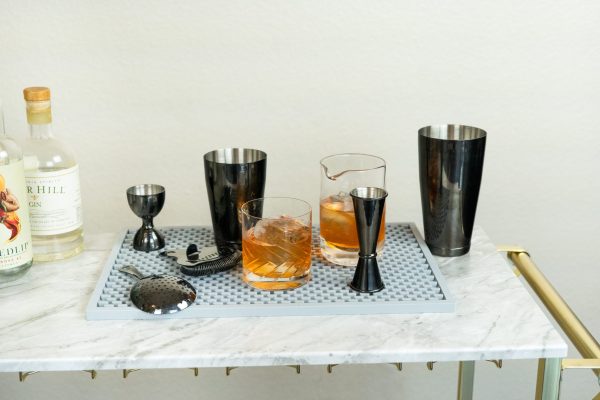
There are only two pieces to work with, and you don’t have to remove a tiny cap or pour through a built-in strainer. That’s particularly helpful in a professional bar when you’re making drink after drink.
Copyright A Bar Above (now available in black)
It’s Versatile
A good-sized Boston shaker gives your cocktail and ice plenty of room to move, making it useful for everything from straightforward Sours to drinks with egg white, fruit, herbs, or other ingredients that need a really vigorous shake.
Depending on the size of your tins and cocktail specs, you may even be able to shake two servings at once. (This is definitely true of our shakers, just sayin’.)
It’s Durable
This is a big one for us. A high-quality stainless steel Boston shaker is built to take some abuse. No glass to break, no built-in strainer to clog, and fewer small parts to lose somewhere in the dishwasher.
Just look at the video below of the A Bar Above shaker after making 100,000 drinks. Yeah, it’s beat up, but it’s still functional! And yes, a customer (and professional bartender) actually sent it back to us when they finally traded in for a new one, just so we could see how it held up.
It’s Easy to Clean
Two tins. That’s it.
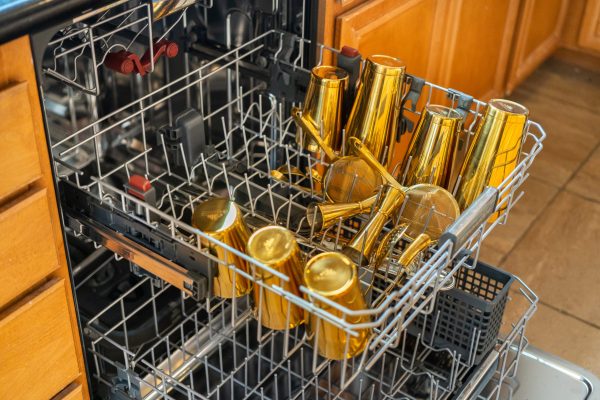
Wash them with warm, soapy water and let them dry. Or, if your shaker is dishwasher-safe like ours, let the dishwasher handle it.

Copyright A Bar Above
You Control the Strain
Unlike a cobbler shaker, a Boston shaker doesn’t have a built-in strainer. I actually consider that a benefit rather than a drawback.
Using a separate Hawthorne strainer gives you more control over your pour, and you can add a fine mesh strainer when a cocktail calls for double straining, as mentioned above.
Copyright A Bar Above
How to Clean and Care for Your Boston Shaker
One of the nice things about stainless steel shaker tins is that they don’t require much babying. After making cocktails, wash the tins thoroughly with warm water and dish soap to remove citrus, sugar, egg, dairy, and other residue. If they’re dishwasher-safe, that’s even easier— For what it’s worth, our A Bar Above shaker tins can go straight into the dishwasher.
Avoid highly abrasive scrubbers that could unnecessarily scratch the finish, and let the tins dry thoroughly before storing them. If you notice stubborn residue or discoloration, give your shaker a deeper clean according to the manufacturer’s care instructions.
Take reasonable care of a quality stainless steel Boston shaker, and it should be making Margaritas with you for a very, very long time.

Copyright A Bar Above
Popular Boston Shaker Cocktails
The Boston shaker is made for cocktails that benefit from—you guessed it—shaking. Here are some classic cocktails to put your shaker to good use, plus a few more modern favorites:
- Margarita: Tequila, orange liqueur, and fresh lime are practically begging for a good shake.
- Daiquiri: Rum, lime, and sugar prove that three ingredients are more than enough when they’re properly balanced and chilled.
- Whiskey Sour: Whiskey, citrus, and sweetener are a classic shaken combination, with or without egg white.
- Sidecar: Cognac, orange liqueur, and lemon juice come together beautifully with proper chilling and dilution.
- Long Island Iced Tea: There may be a lot happening ingredient-wise, but your shaker can handle it.
- Ramos Gin Fizz: If you really want to put your shaking stamina to the test, this famously frothy classic is waiting for you.
- Cosmopolitan: Vodka, cranberry, orange liqueur, and fresh lime get a quick shake for that signature tart, refreshing Cosmo.
- Espresso Martini: Vodka, coffee liqueur, and espresso need a vigorous shake to create that rich, frothy layer on top.
- Naked and Famous: Mezcal, yellow Chartreuse, Aperol, and fresh lime juice get shaken together to properly chill, dilute, and integrate that fresh citrus with the cocktail’s smoky, herbal, and bittersweet flavors.
One important distinction: Not every cocktail belongs in a shaker. Spirit-forward drinks without citrus or other ingredients that need aeration, like a Manhattan or Martini, are generally stirred in a mixing glass instead. Knowing when to shake is just as important as knowing how.
Copyright A Bar Above
Boston Shaker vs. Cobbler Shaker
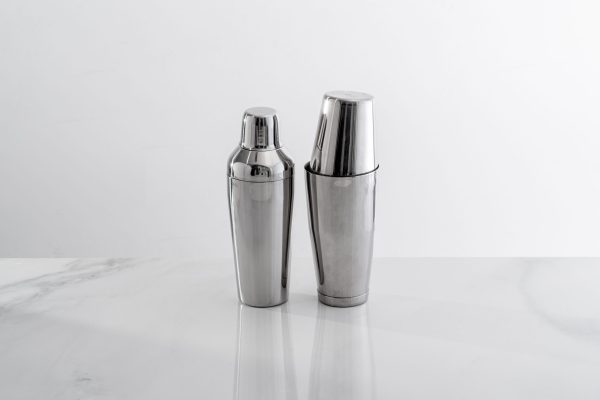
If you’re shopping for a cocktail shaker, you’ll probably find yourself comparing the Boston shaker vs. cobbler shaker.
Like we’ve already discussed, a cobbler shaker is the familiar three-piece style with a shaker body, built-in strainer, and small cap. It’s compact and approachable, and having the strainer built right in can make it appealing to beginners.
The downside? Traditional cobbler shakers can sometimes become difficult to open as the metal contracts from the cold. Their built-in strainers can also pour slowly or become clogged by pulp and muddled ingredients. In the past, Chris has expressed his extreme dislike for cobbler shakers, in fact.
A Boston shaker, meanwhile, has two pieces and requires a separate strainer. There’s a slightly steeper learning curve because you need to learn how to create and break the seal, like I mentioned (again, refer to the video in the top part of this article if your, um, stuck); but once you’ve got that down, it’s quick, efficient, and extremely versatile.
For what it’s worth, we designed our own Cobbler shaker to address that notorious stuck-lid problem, so I’m no longer here to declare war on cobbler shakers. But if you’re asking which style we personally prefer for regular cocktail making, it’s still the Boston shaker.

Copyright A Bar Above
Shake Things Up: Is a Boston Shaker Right for You?
If you make shaken cocktails regularly—or you’re just starting to build a home bar—a Boston shaker is one of those tools you’ll reach for constantly.
It’s simple enough for a beginner, efficient enough for a working bartender, and versatile enough to handle an enormous range of cocktail recipes. There may be a little learning curve when you’re figuring out the seal, but don’t let that put you off. A few cocktails in, it’ll start feeling completely natural.
And that’s really what we look for in great barware: Tools that do their job well, feel good in your hands, and don’t make cocktail-making more complicated than it needs to be.
If you’re ready to add one to your bar, check out our A Bar Above Boston Shaker and put it to work. Your next Margarita awaits.


Hello everyone! I’m on the hunt for information about the finest liquor collections out there. If anyone has personal experiences to share, I would greatly appreciate it. I’m particularly interested in the variety and excellence of spirits. Any insights or recommendations on making the right choice would be highly valued. Thank you in advance!
Hi, Joe! I hope you get a few answers here, but in the meantime, please check out these articles to get you started:
https://abarabove.com/how-to-stock-a-home-bar-essential-bar-tools-and-liquor-to-get-you-started/
https://abarabove.com/fathers-day-gift-guide/
https://abarabove.com/podcast/mtp186-gift-ideas-cocktail-photography-and-writing-a-cocktail-book-an-interview-with-natalie-migliarini-from-beautiful-booze/
Also consider joining our Craft Cocktail Club on Facebook where you can get inspiration for people’s favorite spirits and cocktail recipes. Best of luck!