Copyright A Bar Above, edited with AI
Table of Contents
- Why Do You Need a Cocktail Shaker?
- Boston Shaker vs. Cobbler Shaker: What’s the Difference?
- Comparing the Boston vs. Cobbler Shaker
- Boston Shaker
- Cobbler Shaker
- Boston vs. Cobbler: Which Cocktail Shaker Should You Choose?
Ah, the age-old question for professional bartenders and cocktail enthusiasts alike: Which type of cocktail shaker is best?
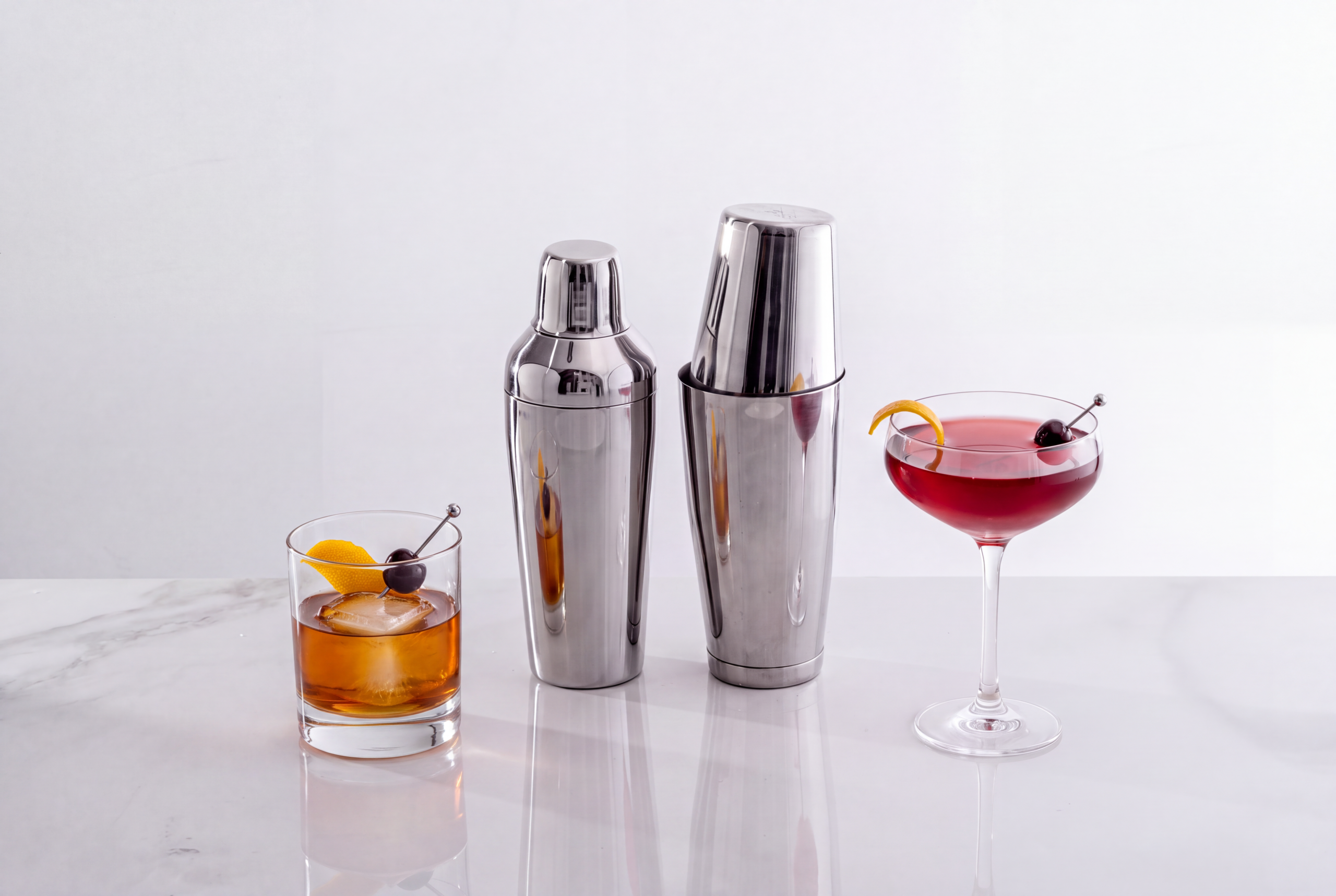
There are three primary styles you’ll come across: the Boston shaker, cobbler shaker, and French (or Parisian) shaker. Today, we’re focusing on the two you’re most likely to encounter: the Boston and Cobbler.
And while we have plenty of experience with both here at A Bar Above, there isn’t necessarily one “correct” answer. The best cocktail shaker depends on what you’re making, how often you’re making drinks, and what you personally find comfortable to use.
We also asked professional bartenders in our Craft Bartenders Community for their thoughts on the Boston shaker vs. Cobbler shaker, so let’s break down the differences, pros, and cons of each.

Why Do You Need a Cocktail Shaker?
Why do you even need a cocktail shaker in the first place?
Shaking is generally used for cocktails containing ingredients that need some extra encouragement to come together—think citrus juice, syrups, fruit, dairy, egg whites, and other non-spirit ingredients.
A cocktail shaker doesn’t simply mix everything together, either. Shaking simultaneously chills, dilutes, combines, and aerates your cocktail.
Mixing Your Cocktail Ingredients
Some cocktail ingredients don’t integrate particularly easily on their own. Give them a vigorous shake with ice, however, and all that movement helps combine your ingredients into one cohesive drink.
This is especially useful for cocktails containing ingredients with different textures and densities, like egg whites and fresh citrus juice.
Your bar spoon still has a very important job, of course. Spirit-forward cocktails such as Martinis and Manhattans are generally stirred rather than shaken because we’re looking for a different texture and level of aeration. Typically you’ll use a mixing glass for that, but you can still use a shaker in a pinch.
Chilling Your Cocktail
Shaking a cocktail with ice brings its temperature down quickly while mixing all those ingredients together.
The combination of ice and vigorous movement creates lots of contact between your cocktail and the cold surface of the ice, allowing the drink to chill efficiently.
And this is one reason we prefer stainless steel cocktail shakers over glass. Stainless steel is durable, lightweight, and doesn’t introduce the obvious breakage risk of aggressively shaking ice inside a glass vessel.
Diluting Your Cocktail
Dilution is an intentional part of making a cocktail.
As you shake with ice, some of that ice melts and becomes water in your drink. That might sound undesirable if you’re new to cocktails, but properly controlled dilution helps soften alcohol’s intensity and brings the ingredients into balance.
Both shaking and stirring chill and dilute cocktails. Shaking additionally introduces more aeration and creates a different texture, which is one reason the technique you choose depends on the drink you’re making.

Boston Shaker vs. Cobbler Shaker: What’s the Difference?
So what’s actually different between these two popular types of cocktail shakers?
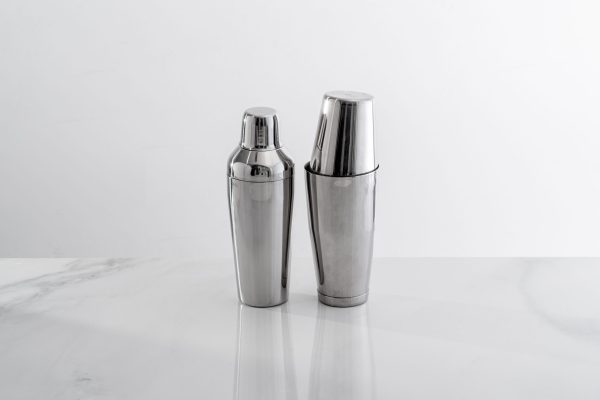
The Boston shaker consists of two vessels that fit together to create a seal. Modern versions commonly use two stainless steel shaker tins, although you’ll sometimes see a metal tin paired with a glass.
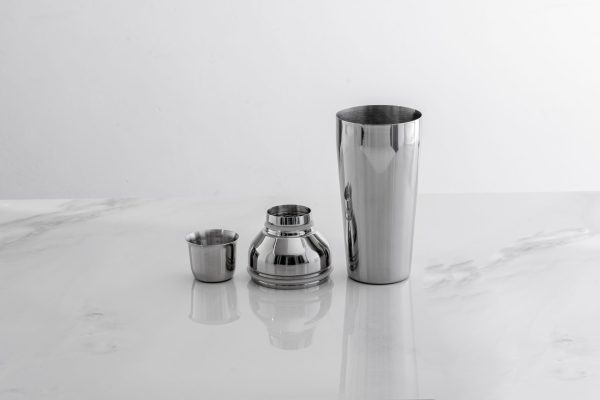
The cobbler shaker is a three-piece cocktail shaker consisting of a main tin, a lid with a built-in strainer, and a removable cap.
That extra piece makes a surprisingly big difference.
Copyright A Bar Above
The Boston shaker is simple, roomy, and fast, but you’ll need a separate cocktail strainer. The Cobbler gives you a shaker and strainer in one compact package, but its additional parts can require a little more cleaning and maintenance.
When choosing between them, think about:
- What you’re making: Different ingredients and techniques can influence how much shaker space and filtration you want.
- Volume: A professional bartender making drinks all night has different needs from someone making one Daiquiri at home.
- Capacity: Larger shakers give ingredients and ice more room to move and can accommodate larger builds.
- Ease of use: Some people love the simplicity of a Cobbler; others prefer the speed and control of a Boston shaker.
- Cleaning: More components generally mean more pieces to wash.
- Style: Yep, this counts, too. Especially if your shaker lives on display on a home bar.
Side note: For a Boston shaker, we recommend two metal tins rather than the old-school tin-and-pint-glass setup. Stainless steel doesn’t shatter when gravity inevitably gets involved.
Comparing the Boston vs. Cobbler Shaker
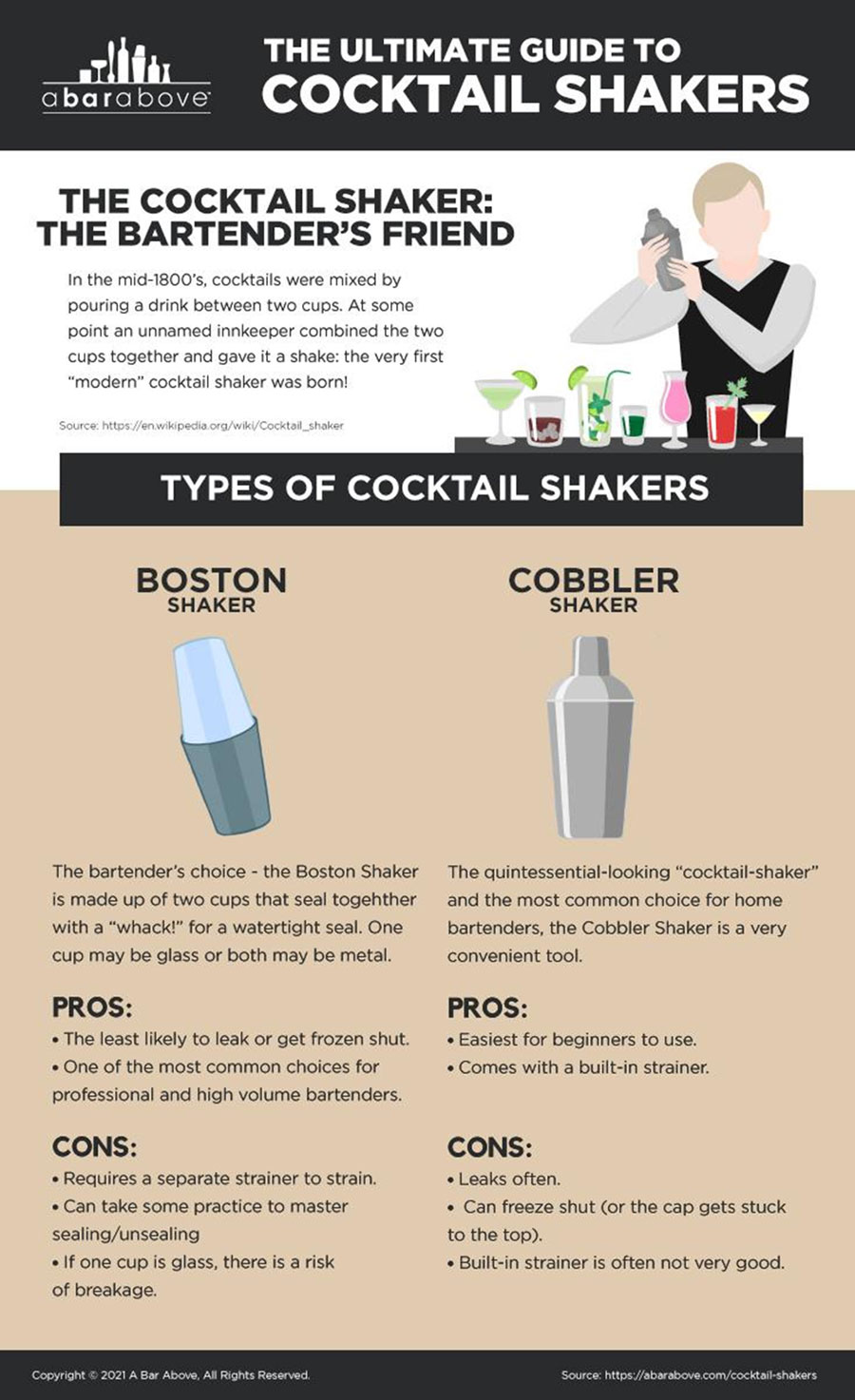
A Boston shaker is a two-piece shaker consisting of a smaller and larger tin that fit together to create a tight seal. Its straightforward construction makes it fast to use and easy to clean, which is one reason you’ll see it behind so many professional bars.
It does, however, require a separate cocktail strainer.
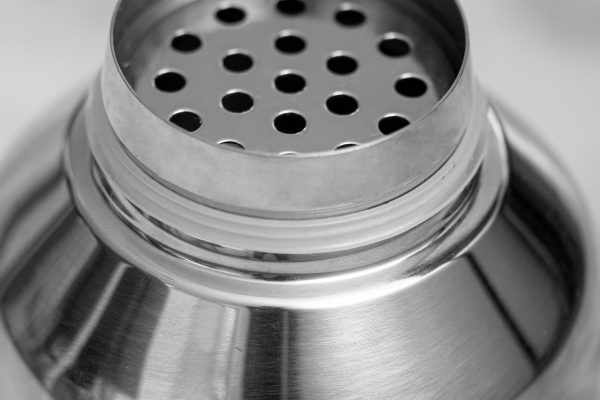
The Cobbler shaker has three pieces: the shaker tin, a lid containing an integrated strainer, and a cap. Its all-in-one construction makes it particularly approachable for home bartenders and anyone who doesn’t want to reach for a separate Hawthorne strainer every time they make a drink.
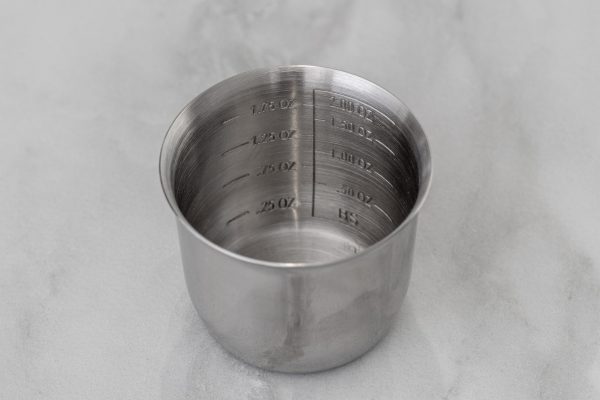
And while some Cobbler caps happen to hold a common cocktail measurement, don’t assume yours is an accurate jigger unless the manufacturer specifically designed and marked it for measuring. Grab an actual jigger when precision matters.
“Cobbler, I don’t like. [It’s] not as easy to clean, and I don’t think it looks professional as it looks like something you can use at home. Bar setting, I would go Boston. […] Personal opinion!” –Harry McCaul, CBC member

Boston Shaker
The Boston shaker is the workhorse you’ll see behind many professional bars.
Its two-piece construction provides plenty of room for ice and ingredients, and larger Boston shakers can accommodate two servings of some cocktail recipes at once.
That extra interior space is also useful for cocktails involving aeration—although your technique and recipe matter just as much as shaker size when you’re chasing that beautiful foam on a Whiskey Sour.

Copyright A Bar Above
Boston Shaker Pros
- Simple construction: Two tins, and that’s it. There are fewer pieces to keep track of.
- Generous capacity: Depending on your recipe and shaker size, there’s often enough room to shake more than one serving at once.
- Fast to use: Once you’ve learned how to seal and separate the tins, the Boston shaker is extremely efficient.
- Easy to clean: The simple two-tin design doesn’t have an integrated strainer or cap with little crevices to clean.
- Multiple weight options: Weighted/weighted and weighted/unweighted combinations let you choose the feel you prefer.
- Professional favorite: Its capacity, speed, and simplicity make it particularly practical in high-volume environments.
- Works with separate strainers: Pair it with a Hawthorne strainer or add a fine mesh strainer when you want to double-strain.
“Boston. Two tins, less pieces to lose, but more useful as both pieces are containers…. Liquid in short cup, ice in tall cup, and you don’t bring the two together until you really need to, thereby avoiding over-dilution of the liquid while you’re building the ‘dry’ ingredients.” –Marcus Deaves, CBC member

Copyright A Bar Above
Boston Shaker Cons
- You’ll need a separate strainer: Unlike a Cobbler shaker, the Boston doesn’t have one built in.
- There’s a learning curve: Creating a proper seal is pretty easy, but learning how to confidently open a Boston shaker takes a little practice.
- It requires additional tools: At minimum, you’ll probably want to pair it with a Hawthorne strainer and jigger.
That said, those separate tools are also part of what gives you more control over measuring and straining your cocktails.
Copyright A Bar Above
Cobbler Shaker
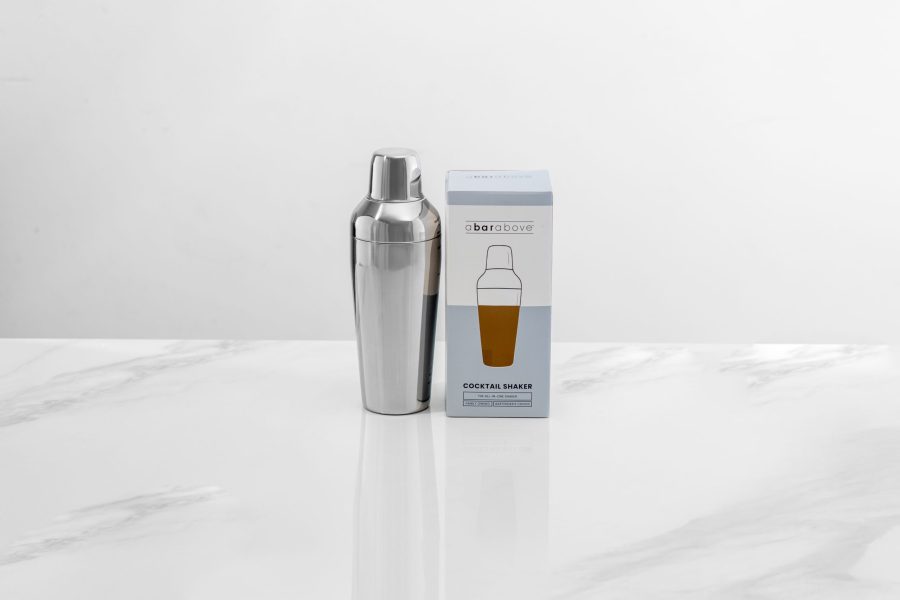
The Cobbler shaker is designed as a compact, all-in-one cocktail shaker.
Its three-piece construction gives you a shaker tin, built-in strainer, and cap, making it approachable for beginners and convenient when you don’t want to use a separate strainer.
Cobbler shakers are also closely associated with Japanese bartending, where beautifully made versions are often used with precise, deliberate shaking techniques.
“The one benefit to cobbler shakers vs Boston shakers is that the cobbler shaker comes in a variety of sizes. This is helpful if a bar or restaurant is doing table-side cocktails. […] Cobbler shakers take less training to use properly since there is little-to-no opportunity for the shaker to break open. So the server can have a small single serving cobbler shaker for every cocktail at the table and shake it to order.” –Chris Tunstall

Copyright A Bar Above
Cobbler Shaker Pros
- All-in-one design: The built-in strainer means you don’t necessarily need a separate Hawthorne strainer.
- Beginner-friendly: There’s no need to learn how to create and break the angled seal of a Boston shaker.
- Compact: The integrated design makes it appealing when storage space is limited.
- Available in different sizes: Smaller versions can be useful for single cocktails and tableside service.
- Beautiful presentation: There’s a reason Cobblers look so good sitting on a bar cart.
- Useful for specialized shaking techniques: Cobbler shakers are particularly associated with Japanese bartending and techniques such as the hard shake.
“Honestly, I love my cobblers. They just feel so good to hold. It’s like a nice chilly massage to shake them. […] And if you have the time to do one drink at a time, it just feels more appropriate to me to use a smaller cobbler shaker than a super-sized Boston shaker for 3 oz of liquid. But don’t get a big cobbler shaker. It ruins the whole point.” –Ben Lawton, CBC member
Copyright A Bar Above
Cobbler Shaker Cons
This is one area where I’d change the original article pretty substantially because many common Cobbler complaints are quality and design problems, not unavoidable characteristics of every Cobbler shaker.
Potential drawbacks include:
- Built-in strainers offer less control: Depending on the design, larger holes can allow smaller ice chips or bits of ingredients through.
- Strainers can clog: Muddled fruit, herbs, and pulp can block the small holes of an integrated strainer.
- More pieces to clean: Three components and an integrated strainer naturally give you more nooks and crannies than two simple tins.
- Smaller capacity: Many Cobblers are designed around one cocktail rather than larger batches.
- The cap is another piece to keep track of: It’s small. Small things have a remarkable talent for disappearing.
- Some designs stick: Chilling metal contracts, and poorly designed Cobbler lids and caps can become frustratingly difficult to remove after shaking.
Copyright A Bar Above
That last one is worth emphasizing: A Cobbler shaker getting hopelessly stuck isn’t a requirement of the style. Good design can dramatically improve how easily the pieces separate after shaking.
“I prefer a weighted Boston shaker; it’s more convenient, more professional, and I don’t have to deal with losing a dumb cap like on a cobbler.” –Kelly Tyree, CBC member
Copyright A Bar Above
Boston vs. Cobbler: Which Cocktail Shaker Should You Choose?
So, Boston shaker vs. Cobbler shaker: Which one is better?
For professional bartenders and anyone making a lot of cocktails at once, I’d generally lean toward the Boston shaker. Its larger capacity, simple construction, speed, and compatibility with separate strainers make it an excellent workhorse.
But that doesn’t mean the Cobbler is merely the beginner option.
A cobbler shaker can be a fantastic choice for someone making one drink at a time, anyone who appreciates its integrated design, or a bartender who simply prefers how it feels and performs. A high-quality Cobbler is also a whole different experience from the cheap three-piece shaker you may have fought with at some point in your cocktail journey.
“For the home bartender it comes down to how often they shake drinks. If you’re making drinks, especially drinks with muddled ingredients, often and/or you like to entertain, then I recommend the Boston for a workhorse. For the majority of home bartenders, a good quality cobbler shaker is probably sufficient; it also looks nicer if it’s being stored on a bar cart versus the more utilitarian Boston.” –Michael Lindgren, CBC member

Ultimately, the best cocktail shaker is the one that fits your workflow, feels comfortable in your hands, and makes you want to actually use it.
If you want maximum capacity, speed, and control, reach for a Boston shaker. If you prefer an integrated strainer and classic three-piece design, a Cobbler might be your perfect match.
And if you’re still undecided? There’s absolutely no rule saying your bar can only have one!