Copyright A Bar Above
Table of Contents
- What Is a Cocktail Jigger?
- What Is a Japanese Jigger?
- Japanese Jigger Measurements
- How to Use a Japanese Jigger
- Why Accurate Cocktail Measurements Matter
- Types of Cocktail Jiggers
- History of the Cocktail Jigger
- Japanese Bartending & the Japanese Jigger
- Benefits of Using a Japanese Jigger
- Using a Jigger for Layered Cocktails
- How to Choose the Best Japanese Jigger
- Caring for Your Cocktail Jigger
- Other Essential Bar Tools
- Final Thoughts

Copyright A Bar Above
A quarter-ounce here. An extra half-ounce there. It may not sound like much, but small measurement differences or discrepancy can completely throw off the balance of a cocktail.
Enter the humble cocktail jigger.
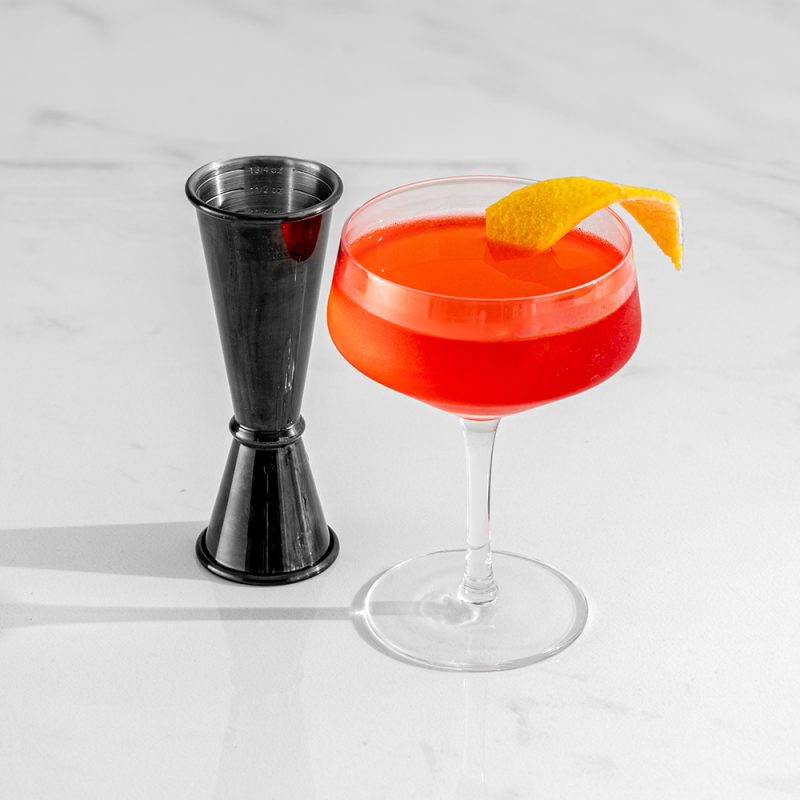
A jigger is one of the simplest tools behind the bar, but I’d also argue it’s one of the most important. It lets you accurately measure your spirits, citrus, syrups, liqueurs, and any other liquid ingredients so you can make a balanced cocktail… and then actually make the same balanced cocktail again.
There are several different styles of jiggers available, but today we’re focusing on one of our favorites: the Japanese jigger.
Its tall, slender shape isn’t just nice to look at. Japanese-style jiggers are designed for comfortable handling, controlled pouring, and precise measurements, which is why you’ll find them in both professional and home bars.
So, what makes a Japanese jigger different from other types of jiggers, and how do you actually use one? Let’s discuss.

Copyright A Bar Above
What is a Cocktail Jigger?
A cocktail jigger is a small measuring tool used by bartenders to portion liquid ingredients when making drinks. Like a really small measuring cup.
Jiggers come in different shapes, sizes, and materials, but many are double-sided, giving you two measurement sizes in a single tool (ours is 1 ounce on one side and 2 ounces on the other). Measurement markings inside the cups may allow you to measure several different quantities without reaching for another jigger.
Free-pouring without measuring ingredients may look impressive, but a jigger provides accuracy and consistency. Sorry, hipster bartender, but that’s definitely more important than looking cool, whether you’re making your first Daiquiri at home or your 100th Margarita during a Friday-night bar shift.
Copyright A Bar Above
What Is a Japanese Jigger?
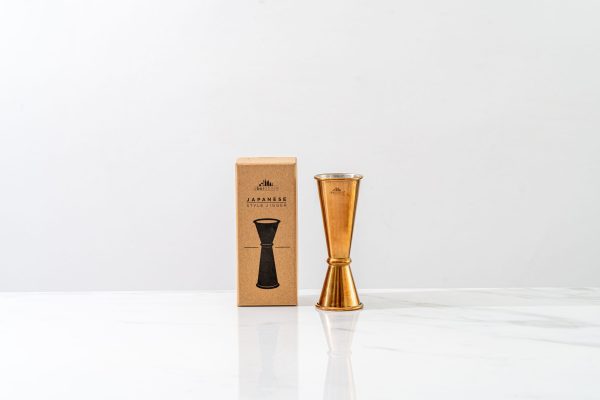
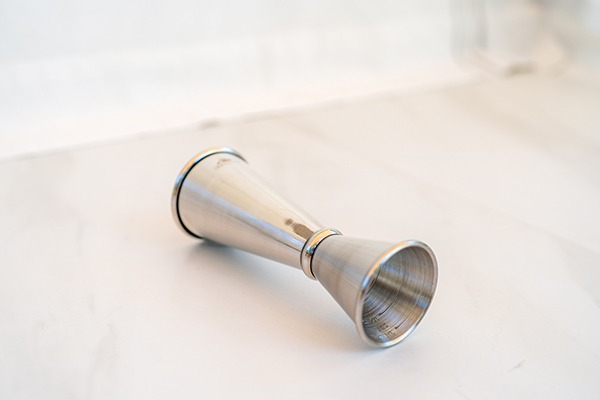
A Japanese jigger is a style of double-sided cocktail jigger known for its tall, narrow, hourglass shape.
Typically, one end is larger than the other, allowing you to measure multiple quantities with the same tool. Then the narrow center also gives you a natural place to grip the jigger between your fingers.
Compared with shorter, wider jigger styles, the elongated shape can make it easier to hold, fill, and pour with control once you get comfortable using it. Which style you like is honestly personal preference; since I have pretty small hands, I tend to reach for my rounded bell jigger with a narrow connector (more on that style below), while Chris tends to grab the Japanese jigger more often than not.
Most professional-quality Japanese jiggers are made from stainless steel, which makes sense behind a bar: It’s durable, easy to clean, and capable of surviving a whole lot of cocktail-making (and dropping). We actually have our factory THROW the jiggers on the ground really hard, repeatedly, to make sure they won’t break at the weld. Seriously, we want to make sure it can actually hold up to being dropped in a busy bar. (It does.)
And let’s be honest: It looks pretty darn good sitting on your bar, too.
Copyright A Bar Above
Japanese Jigger Measurements
One of the biggest reasons we like Japanese jiggers is their versatility.
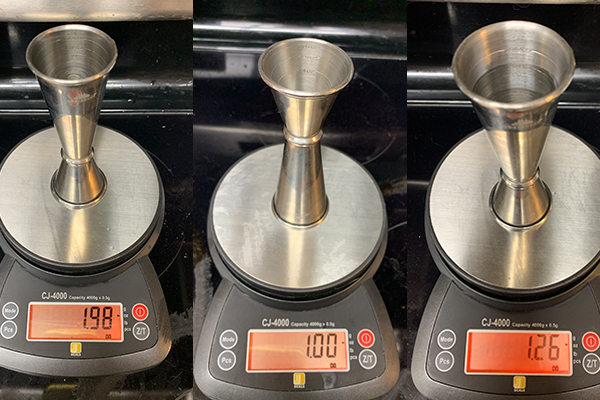
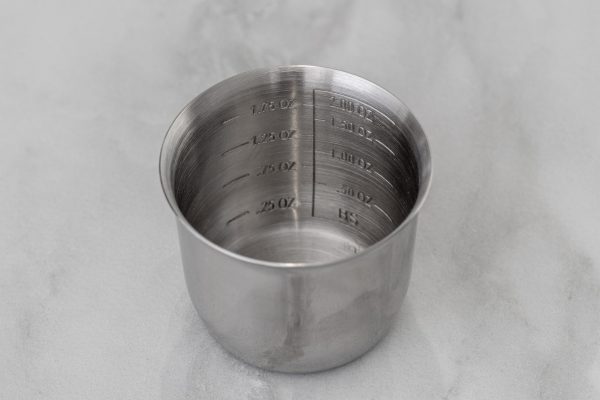
A common Japanese jigger has a 1-ounce cup on one end and a 2-ounce cup on the other, with additional measurement lines inside the cups for smaller quantities.
The exact measurements vary by manufacturer, so always check the markings on your particular jigger rather than assuming they’re universal. Ours have a whopping 10 measurements, which is not common, FYI. And since I’m touting the virtues of A Bar Above cocktail jiggers, our are also calibrated to actually be correct and precise. You’d be surprised how many popular brands we’ve tested that are not at all accurate, which of course would throw off your drinks.
Copyright A Bar Above
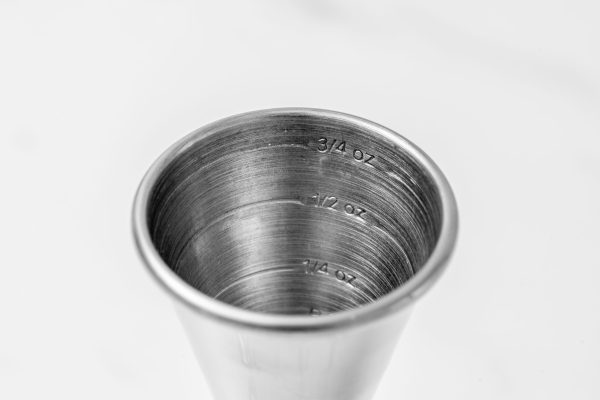
Those interior markings you see in the photo above are especially useful for cocktail recipes calling for smaller quantities like 1/4 ounce, 1/2 ounce, or 3/4 ounce. Instead of eyeballing your pour—and dirtying several measuring tools—you can measure multiple ingredients with the same jigger, making sure they’re consistent every time you make the recipe.
Copyright A Bar Above
How to Use a Japanese Jigger
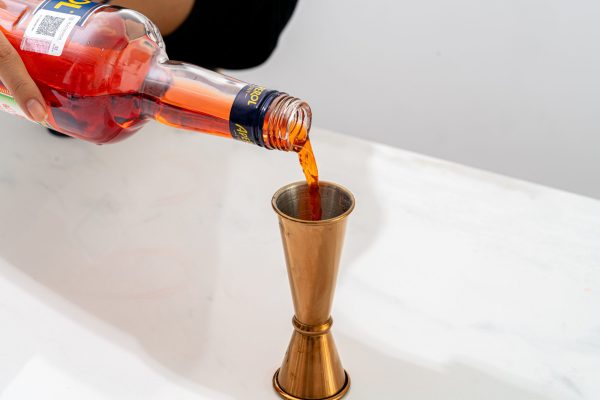
Using a cocktail jigger is super straightforward:
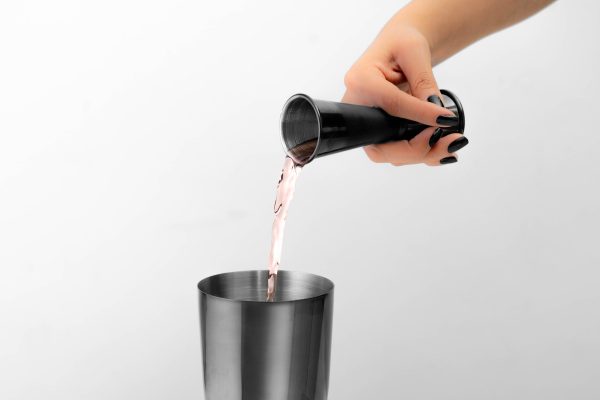
- Hold the jigger around its narrow center, ideally between your thumb and fingers.
- Choose the appropriate side or measurement marking for your recipe.
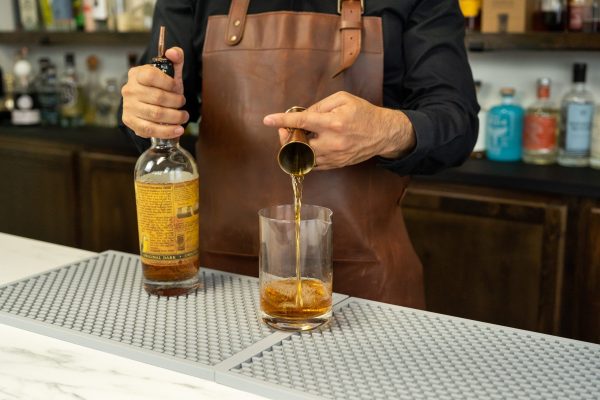
- Pour your ingredient into the jigger until the liquid reaches the correct measurement.
- Tip the measured ingredient into your cocktail shaker, mixing glass, or serving glass.
- Repeat with the remaining ingredients.
For measurements that fill the entire cup, you’ll generally want to fill the jigger right to the top without overflowing.
And don’t feel like you need to use bartender-level speed. Start slowly and focus on accuracy. With practice, you’ll develop the muscle memory to flip between measurements and pour smoothly without thinking too much about it.
Copyright A Bar Above
Why Accurate Cocktail Measurements Matter
A jigger isn’t just about making sure you don’t accidentally pour too much alcohol. It’s about balance and consistency.
Cocktail recipes are built around ratios. Spirit, sweetness, acidity, bitterness, and dilution all work together, and changing one component can affect the entire drink.
Imagine making a Daiquiri with rum, fresh lime juice, and simple syrup. If you’re heavy-handed with the lime, it’ll be overly tart. Too much syrup? Suddenly you’re drinking liquid candy.
Copyright A Bar Above
Measure everything accurately, and you have a much better chance of getting the cocktail the recipe developer intended. (This is also where a correctly-marked jigger comes in, like I was talking about before.)
This is particularly important in professional bars, where a guest should be able to order the same drink twice and receive essentially the same cocktail both times. Accurate pours can also help a bar manage inventory and reduce waste. A little over-pour multiplied by hundreds of cocktails isn’t so little anymore.
Copyright A Bar Above
Types of Cocktail Jiggers
The Japanese jigger isn’t your only option, like I mentioned. You’ll find several types of cocktail jiggers, including these:
- Japanese jiggers: Tall, narrow, and typically double-sided with an elongated hourglass shape.
- Bell jiggers: Shorter and rounder, with two bell-shaped measuring cups.
- Single jiggers: One measuring cup rather than two. Not as versatile, obviously. Think shot glasses.
- Novelty jiggers: Because apparently someone looked at a perfectly functional measuring tool and thought, “But what if it were shaped like a skull?”
Different bartenders have different preferences, and that’s perfectly fine. The best cocktail jigger is ultimately the one you can use accurately, comfortably, and consistently. We happen to be big fans of the Japanese style and the bell because of how they feel in the hand and the number of measurements you can fit into one compact tool. Well, at least with ours. Usually other brands have fewer markings, which is honestly just annoying when you need a 1/4 ounce pour.
Copyright A Bar Above
History of the Cocktail Jigger
The history of the cocktail jigger goes back to the 19th century, although measuring vessels themselves obviously existed long before cocktails came along.
The word jigger was already being used in relation to small quantities of liquor by the late 1800s, but one particularly important development came from Chicago inventor Cornelius P. Dungan. In 1893, Dungan received a U.S. patent for a double-ended measuring glass consisting of two differently-sized measuring cups joined together at their bases. Sound familiar?
That basic concept—a larger measure on one end and a smaller one on the other—is still recognizable in most cocktail jiggers today. More than a century later, we may have changed the materials and refined the shape, but we’re still using the same basic idea.

Copyright A Bar Above
Japanese Bartending & the Japanese Jigger
Japanese bartending has become internationally respected for its emphasis on precision, technique, hospitality, and attention to detail. The tools associated with this style often reflect those same priorities, and the Japanese jigger is a great example: Its slender shape allows for controlled handling and precise pouring while maintaining a clean, elegant aesthetic.
As Japanese bartending techniques and tools gained greater international attention, Japanese-style jiggers became increasingly common in cocktail bars outside Japan as well.
Today, Japanese-style jiggers are a familiar sight in cocktail bars around the world. Their combination of precise measurement, an ergonomic grip, and a clean, streamlined design makes them particularly well suited to both high-volume professional bartending and making drinks at home.

Copyright A Bar Above
Benefits of Using a Jigger
So why choose a jigger over free-pouring or even just a shot glass?
- Precision: This is the big one. Multiple measurement markings allow you to accurately portion ingredients ranging from small amounts of syrups and citrus to full spirit pours. Obviously there are other style that have these markings, but some may not have as many, hold as much liquid, or even have any markings at all.
- Consistency: Accurate measurements mean you can recreate a cocktail again and again without wondering why Tuesday’s version was perfect and Wednesday’s tastes completely different.
- Comfortable Handling: The narrow waist gives your fingers a natural gripping point for many people, while the elongated cups make the jigger easy to manipulate and pour from.
- Less Waste: Accurate pours help prevent over-pouring, which matters at home and becomes particularly important in a professional bar.
- Durability: A quality stainless steel jigger can handle years of regular use without the fragility of glass or plastic measuring tools.
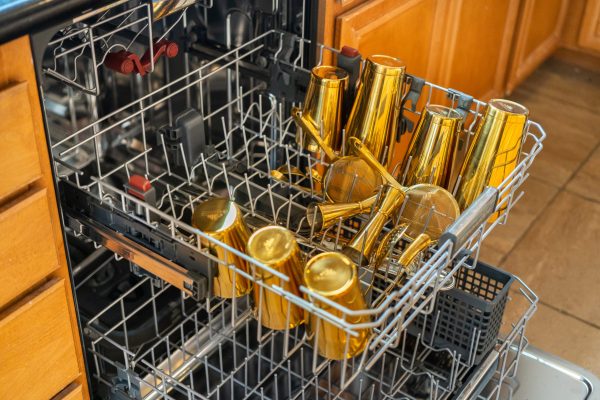
- Easy Cleaning: There’s not much to clean here. Rinse or wash your jigger after use—or, if yours is dishwasher-safe, let the machine do the work.
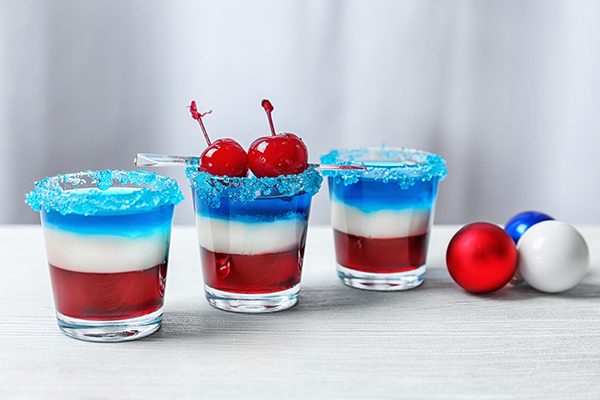
Photo courtesy of DesignPickle/stock.Adobe.com
Can You Use a Jigger for Layered Cocktails?
Did you know that your jigger isn’t limited to measuring? It can also help when you’re creating layered cocktails.
Layered drinks depend on carefully adding liquids according to their relative densities so they sit on top of one another rather than immediately mixing together. Measuring those ingredients with a jigger keeps your quantities controlled, and its narrow pour can help you add the liquid slowly.
Pair it with a bar spoon, pouring gently over the back of the spoon, for even more control. Just don’t expect every combination of liquids to cooperate simply because you asked nicely. Density matters!
Copyright A Bar Above
How to Choose the Best Japanese Jigger
If you’re shopping for a Japanese jigger, there are a few things worth looking at beyond appearance.
First, check the measurements. Make sure the jigger includes the quantities you regularly use in cocktail recipes, and look for markings that are easy to read while you’re actually pouring.
Next, consider material and construction. We prefer food-safe stainless steel because it’s durable, easy to maintain, and well suited to both professional and home bars. Stainless steel is the most common choice for modern Japanese jiggers, although you’ll also find plastic versions. Whatever look you prefer, I’d prioritize food-safe materials, clearly marked measurements, and durability over aesthetics alone.
Copyright A Bar Above
Then there’s accuracy.
This one seems obvious, but like I mentioned before, your measuring tool isn’t particularly useful if its measurements aren’t accurate. When we developed the A Bar Above Japanese Jigger, accuracy was something we specifically tested because a beautifully designed jigger that’s consistently giving you the wrong measurement is really just a very tiny cup.
Finally, think about comfort. A good Japanese jigger should feel balanced and natural in your hand, especially if you’re going to use it repeatedly during a shift.
Our A Bar Above Japanese jigger is designed with all of those things in mind: accurate measurements, durable stainless steel construction, and a tall, ergonomic shape that’s comfortable for repeated pours.
Copyright A Bar Above
Caring for Your Cocktail Jigger
The good news: Cocktail jiggers are pretty low maintenance.
Wash yours after use so sugary syrups, citrus juice, liqueurs, and other ingredients don’t dry onto the surface. Warm water and dish soap will do the job for most jiggers, while dishwasher-safe stainless steel versions can make cleanup even easier.
Dry your jigger thoroughly before storing it, and avoid highly abrasive cleaners that could unnecessarily damage the finish.
Take basic care of a quality stainless steel jigger, and it’ll probably be hanging around your bar for quite a while.

Copyright A Bar Above
Other Essential Bar Tools
A jigger may be tiny, but it works as part of a larger cocktail-making toolkit.
If you’re building a home bar from scratch, I’d pair it with a few other versatile essentials:
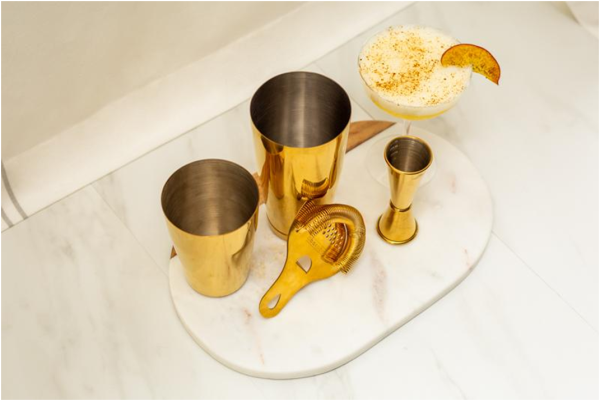
- Cocktail shaker: For chilling, diluting, and aerating shaken cocktails that contain ingredients other than alcohol, such as juice or egg whites.
- Mixing glass: For spirit-forward drinks that are better stirred than shaken.
- Hawthorne strainer: For separating your finished cocktail from the ice after shaking.
- Bar spoon: For smoothly stirring cocktails—and helping with those layered drinks we mentioned earlier.
- Citrus juicer: Because fresh citrus really does make a difference.
- Good glassware: Not strictly necessary for making the drink, but presentation is part of the fun.
You don’t need every shiny cocktail gadget you see to make great drinks. Start with quality versions of the tools you’ll actually use and build from there.

Copyright A Bar Above
Using a Cocktail Jigger: Small Tool, Big Difference
A Japanese jigger gives you precise measurements, consistency, control, and a comfortable way to move between different quantities without juggling several measuring cups. That’s useful for a professional bartender making hundreds of drinks but also equally useful when you’re making exactly one Bijou in your kitchen or a whole bunch of Chocolate Martinis for a party.
If you’re putting together your cocktail toolkit, don’t overlook the measuring part of the equation. Grab a quality jigger, practice your pour, and give those carefully balanced cocktail recipes the accuracy they deserve.